
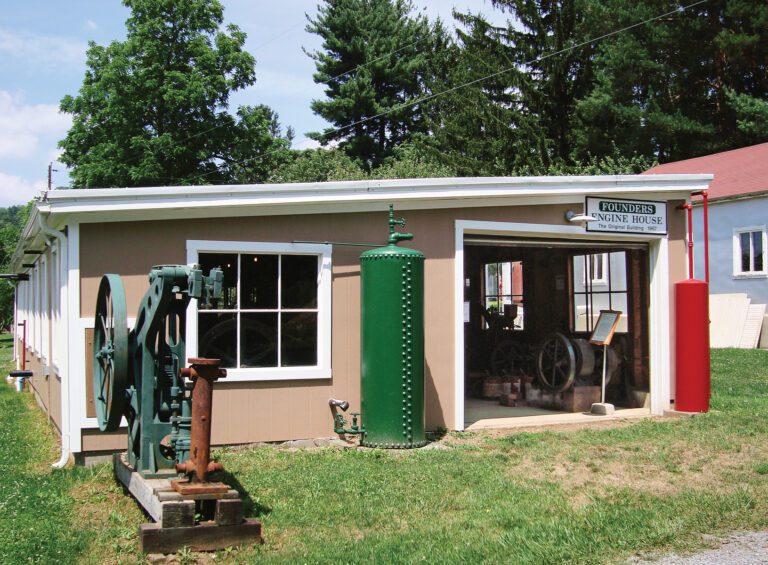
The Founders Engine House
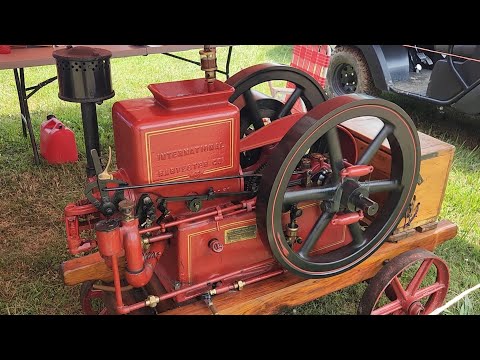
The Founders Engine House — the original structure at Coolspring Power Museum — was originally called The Engine House. It was built in the fall of 1967 by Paul Harvey and his father as a 12-by-20-foot structure that housed four engines. Three are still on their original settings: the 1906 6hp International, the 1902 Klein Model 4, and the vertical 1898 National Transit, which is affectionately known as the “bang-bang” for its distinctive exhaust sound.
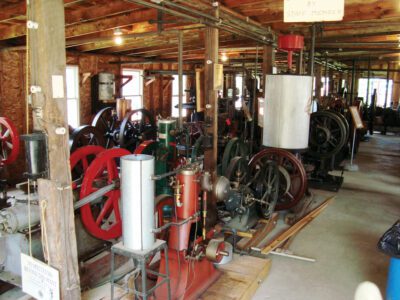
The original structure seemed all that would ever be needed as the concept for a museum would not come for another 19 years. However, in 1968, the size of the building doubled to include the 1896 12hp Reid and the circa-1905 Klein Model 5. Two years later, the building achieved its present size.
All engines included were early acquisitions, which accounts for the variety represented there. The Engine House served as a popular display of the early collection for 40 years, but time and weather took a toll. In 2010, the building received a major restoration that included a new roof and siding. By then, the “Founders” name had been adopted, and it now displays the beginnings of Coolspring Power Museum.
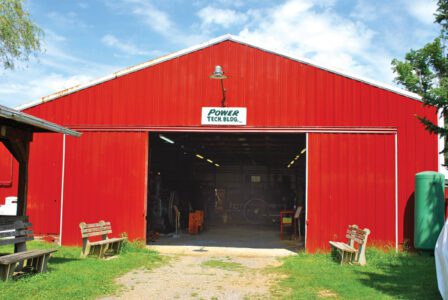
The Power Technology Building
The Power Technology Building (Power Tech) was erected in 1971 and was the second building on the Coolspring Power Museum grounds. For many years, it was called the “Big Barn” as it offered so much open space.
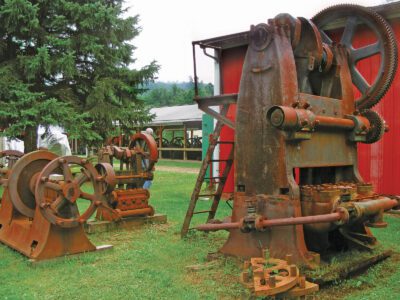
The 1912 125hp Klein and the Marinette were the first two engines to be installed. Soon others arrived until the building was full. With the creation of the museum in 1985, the name was changed to the Power Technology Building, or more simply, the PTB. The displays frequently are changed and updated in this building.
In 1989 Paul Harvey’s aunt, Dorothy Kougher, made the Annex possible. Aunt Dot, as she was affectionately called, always loved to chat with the visitors to the museum.
John P. Wilcox Power House
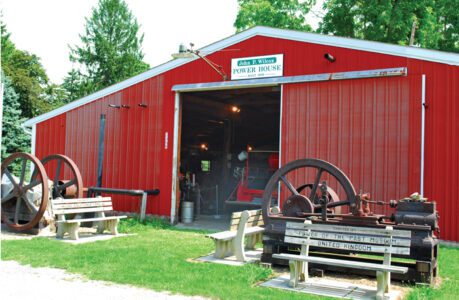
The Power House was built in 1976 and was the third building on the Coolspring grounds. This was the first structure that was jointly planned by Paul Harvey and John Wilcox, and the initial plan was for it to contain electrical generating equipment. With John’s involvement, many of his engines found a home there. As time progressed the original theme was abandoned, but the name became permanent.
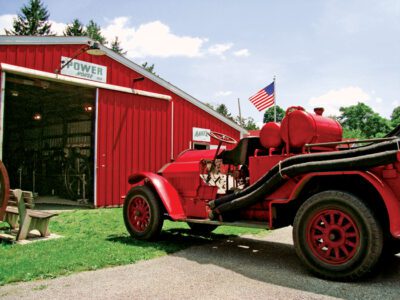
Two years after the building of the Power House, John and Paul added the Annex to house and display a fine but static collection. This was updated in 2010 and now presents a vibrant collection of rare and operating engines.
The main building was renamed the John P. Wilcox Power House at a memorial service in the fall of 2010.
Kougher Half Breed Pavilion
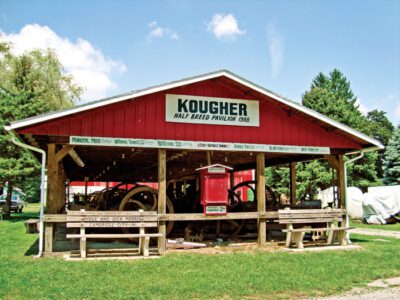
As the collection of oil field steam-to-gas converted engines (half-breeds) increased, there came a need for a display place. An open-type structure seemed appropriate and offered the best viewing.
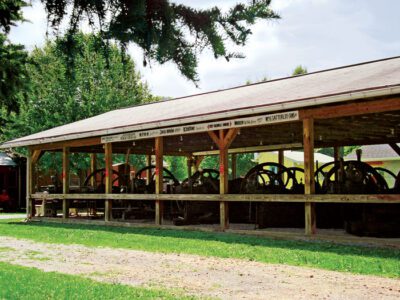
Paul Harvey’s uncle, Bruce Kougher, came to the rescue offering to fund the structure. It was built in 1985 and soon filled with half-breed engines.
A few engines have changed over the years, but the theme continues with most engines kept in their original location.
Coolspring Power Museum presents an illuminating history of the evolution of internal combustion engine technology. The museum’s collection includes hundreds of stationary engines housed in more than 35 buildings and outdoor displays.